
Sytropin is an HGH secretagogue — not synthetic growth hormone. This is the most important distinction to understand before evaluating it. It doesn't contain HGH. It provides the amino acid building blocks and growth factors that support your pituitary gland's own production of growth hormone.
How It Works
The pituitary gland produces HGH in pulsatile bursts — primarily during deep sleep and after intense exercise. These pulses are triggered by growth hormone-releasing hormone (GHRH) and modulated by amino acid signaling. Sytropin provides precursor amino acids and growth factors that support this natural release process.
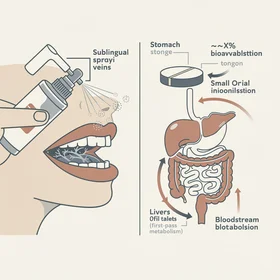
The sublingual spray delivery is Sytropin's primary differentiator. Sprayed under the tongue, the amino acid blend is absorbed through the oral mucosa directly into the bloodstream — bypassing the digestive system and first-pass liver metabolism. This is the same principle behind sublingual medications (nitroglycerin, some hormone therapies) — faster absorption and higher bioavailability than swallowed capsules.
Ingredient Breakdown

Sytropin HGH oral spray — sublingual delivery system.
- L-Arginine: The most studied amino acid for GH stimulation. Multiple studies show L-Arginine supplementation increases resting and exercise-induced GH output. Works by suppressing somatostatin (the hormone that inhibits GH release).
- L-Glutamine: The most abundant amino acid in skeletal muscle. Supplementation supports GH release — a study in the American Journal of Clinical Nutrition showed even small oral doses elevated plasma GH levels.
- GABA (Gamma-Aminobutyric Acid): A neurotransmitter that stimulates GH release from the anterior pituitary. A study published in Medicine & Science in Sports & Exercise showed GABA supplementation increased resting GH levels by up to 400%.
- Alpha GPC: A choline compound that crosses the blood-brain barrier and supports GH secretion. Also supports cognitive function and power output during exercise.
- L-Lysine: Works synergistically with L-Arginine to amplify GH release — the combination produces a larger GH spike than either amino acid alone.
- Growth Factors: Additional signaling compounds that support the pituitary release cycle.
Honest Pros and Cons
Pros
- Sublingual delivery — better bioavailability than capsules
- 20+ year track record — one of the longest-running HGH supplements
- No prescription needed
- Amino acid-based — low side effect risk
- Supports natural GH production (doesn't replace it)
- 90-day money-back guarantee
- GMP-certified manufacturing (Speedwinds Nutrition)
Cons
- Won't produce results comparable to injectable HGH
- No published product-specific clinical trial (ingredients have individual studies)
- Results take weeks of consistent use to notice
- Monthly cost adds up over long-term use
- Not suitable for addressing clinically diagnosed GH deficiency
- Individual amino acid GH studies use varying doses — hard to compare to spray delivery
The maker publishes customer Sytropin reviews on its own site. They are self-selected, so read them as anecdotes, but the pattern in them (energy and sleep first, body composition later) matches what the ingredient evidence would predict.
Who Sytropin Is Best For
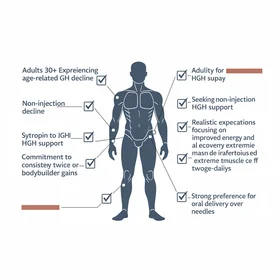
- Men over 30 noticing changes in recovery, energy, or body composition
- Fitness enthusiasts who want natural GH support alongside training
- People who prefer sublingual delivery over swallowing multiple capsules
- Anyone looking for a non-prescription, non-injection approach to HGH support
- People who've already optimized sleep, training, and nutrition and want additional support
Alternatives to Sytropin
Sytropin is a solid option for OTC HGH support, but it is not the only path. Here are the main alternatives and when each makes more sense.
Other OTC HGH Secretagogues
GenF20 Plus and HyperGH 14x are the two most popular alternatives to Sytropin in the OTC space. Both use similar amino acid formulations but deliver primarily via capsules rather than sublingual spray. See our side-by-side comparison for a detailed feature grid. Another option is purchasing standalone amino acids (L-Arginine, L-Glutamine, GABA) individually — lower cost, but less convenient and without the sublingual delivery advantage.
Prescription Peptide Therapy
Instead of OTC supplements, men with confirmed low IGF-1 levels may benefit more from prescription peptides like Sermorelin or the Ipamorelin + CJC-1295 stack. These deliver clinical-grade GH stimulation at pharmaceutical potency — measurable and dose-dependent. The trade-off: subcutaneous injection, physician monitoring, regular blood work, and $200–500+/month. This is the most potent alternative for men who want verifiable results beyond what OTC products can deliver.
Lifestyle-Only Approach
The zero-cost alternative is focusing entirely on natural GH optimization — quality sleep, heavy compound training, intermittent fasting, and blood sugar management. For detailed protocols, the dosage and optimization guide covers lifestyle strategies that complement supplementation. For men under 35 with healthy pituitary function, this may be all that's needed.
Injectable HGH (Somatropin)
Synthetic recombinant HGH is the most potent option available — and the most expensive and risky. At $800–2,000+/month with side effects including joint pain, insulin resistance, and potential organ growth, injectable somatropin is a medical intervention for diagnosed GH deficiency, not a supplement alternative. It replaces natural production entirely rather than supporting it.
Bottom line: Most men should start with lifestyle optimization, try an OTC secretagogue like Sytropin for additional support, and consider prescription options only if blood work shows clinical need. Check our FAQ for more details on choosing the right approach.
Who Should Look Elsewhere
- Anyone with clinically diagnosed GH deficiency — see an endocrinologist
- People expecting injectable-HGH-level results from a supplement
- Those who aren't willing to commit to consistent daily use for at least 90 days
Limitations & What to Know
No honest review is complete without addressing the limitations and safety considerations of any supplement. Here's what you should weigh before trying Sytropin — or any HGH secretagogue.
- No product-specific clinical trial: While individual ingredients like L-Arginine and GABA have published studies supporting GH release, the Sytropin formula as a whole has not been tested in a randomized, controlled clinical trial. This is a limitation shared across virtually all OTC HGH supplements — but it means the combined-formula efficacy is inferred from ingredient-level evidence rather than demonstrated directly (Journal of the International Society of Sports Nutrition, 2008).
- Side effect considerations: The amino acid ingredients in Sytropin have a generally favorable safety profile, but caution is warranted. L-Arginine may lower blood pressure and interact with blood-thinning medications or nitrates. GABA can cause drowsiness, tingling, or mild shortness of breath at higher doses. Anyone taking prescription medications — especially for blood pressure, diabetes, or hormonal conditions — should consult a healthcare provider before starting any GH-support supplement (Mayo Clinic, Drugs & Supplements: L-Arginine).
- Not a replacement for medical treatment: Sytropin is a dietary supplement, not a medical intervention. It is not intended to diagnose, treat, cure, or prevent any disease. Men with clinically diagnosed growth hormone deficiency (confirmed by IGF-1 blood testing and stimulation tests) need prescription HGH or peptide therapy under physician supervision — an OTC secretagogue is not appropriate for that use case.
- Age-related GH decline is natural: The anterior pituitary produces less GH with age. While secretagogues may support the body's remaining GH output, they cannot reverse the underlying age-related decline in pituitary capacity. Expectations should be calibrated accordingly — improvements in sleep quality and recovery are more realistic outcomes than dramatic body composition changes (Endocrine Reviews, 2013).
- Regulatory status: As a dietary supplement, Sytropin is regulated under DSHEA (Dietary Supplement Health and Education Act of 1994), not as a drug. This means the FDA does not evaluate it for efficacy prior to sale — only for safety. Consumers should understand this distinction when evaluating marketing claims from any supplement brand.
The bottom line: Sytropin's amino acid formula carries low safety risk for most healthy adults, but it is not without limitations. Consult a doctor before use if you have any pre-existing conditions, are taking medications, or are under 18.
For the full picture of what injections, peptides and sprays each do to you, Ripped Science keeps an HGH side effects guide that separates the three routes.